Cart
Your shopping cart is empty! 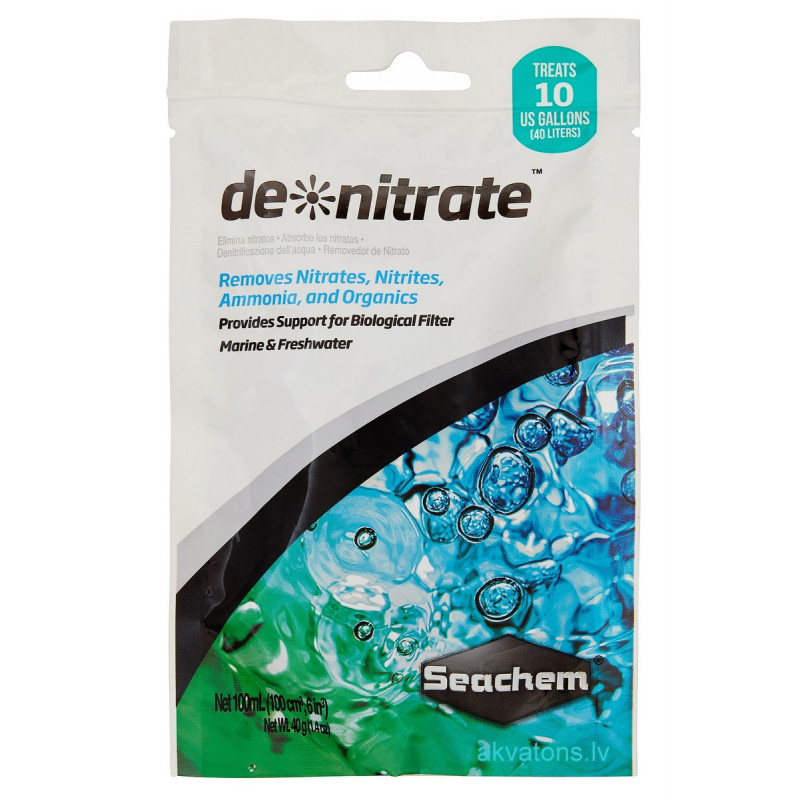

Removes nitrates, nitrites, ammonia and organic matter.
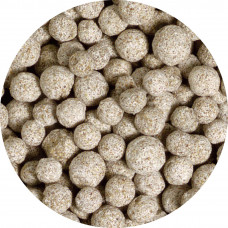
Biological material with high porosity
Pore size well suited for anaerobic bacteria
No risk of hydrogen sulphide formation as in sulfur-based media
de❊nitrate ™ is an economical, natural porous material with pore distribution and geometry that promotes both aerobic nitrification within the first few millimeters of depth and anaerobic denitrification in the core. The material has a large surface area and maintains a high bacterial density. Although de❊nitrate ™ has the ability to trap nitrate, it, like other nitrate trapping materials such as certain zeolites and synthetic resins, is very limited and the main nitrate removal mechanism is anaerobic.
Live rocks or reef rocks remove nitrates by anaerobic denitrification. de❊nitrate ™ removes nitrates in the same way. The efficiency is increased several times due to the filtration of water through a porous denitrate ™. As with reef rock, anaerobic conditions are achieved through porosity and oxygen depletion as a result of an aerobic process at the surface. Therefore, excessive flow rates should be avoided as they can hinder the development of an adequate anaerobic environment to support denitrifying bacteria.
de❊nitrate ™ is also an excellent medium for aerobic nitrification and an ideal biological filter in drip pans, canister filters, sedimentation tanks or even box filters. At high flow rates (over 350 liters per hour) it will function exclusively as an aerobic filter. At low flow rates (less than 200 liters per hour) it will operate as both an aerobic filter and an anaerobic denitrifying filter.
For best results, the de❊nitrate ™ should be placed so that water passes through it, for example in a canister filter, chemical filtration module or box filter. The flow rate should not exceed 200 liters per hour. If higher flow rates are unavoidable, use Matrix ™ or Pond Matrix ™. It is best to rinse off the dust before using. After using de❊nitrate ™ for several days, the nitrate concentrations should begin to drop and gradually level out to around 4–5 mg / L as nitrate. As long as the nitrate concentration remains under control, the product is not depleted. Each 500 ml of de❊nitrate ™ is treated with approximately 100-200 liters of water, depending on the initial nitrate concentration and the current bioburden. Sufficient nitrate should be used to remove nitrate at a rate at least the same as the rate of formation. If a very high nitrate content is present initially, it should be reduced to less than 20 mg / l with a water change.